Body piercing safety in Douar Lemdayna, Morocco
Choosing a piercing studio in Douar Lemdayna? Use this BAQA guide to ask clearer questions about hygiene, jewellery, training and aftercare.
Body art guidance for Douar Lemdayna
Explore BAQA guidance for different procedures and safety topics in Douar Lemdayna, Morocco. Each page answers a distinct set of client questions.
Body piercing standards clients should expect in Douar Lemdayna
BAQA body piercing standards cover anatomy assessment, sterile single-use piercing needles, verified sterilisation, suitable initial jewellery, accurate placement, informed consent and procedure-specific aftercare. Piercing guns should never replace appropriate professional equipment for body piercing.
What clients in Douar Lemdayna should ask
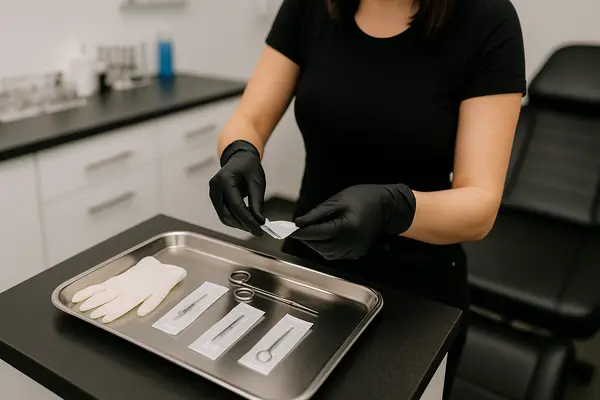
For body piercing, one of the most useful topics is autoclave monitoring and sterilisation records. A client does not need to be an inspector to ask sensible questions. They can ask to see the sterile needle package before it is opened and listen for a clear, confident answer.
BAQA promotes safer decision making so that public conversations about body art are not based only on price, photographs or social media popularity. That approach helps clients compare studios more fairly.
BAQA standards in Douar Lemdayna
The BodyArt Qualification Authority is more than an industry body. It is a collaborative community focused on protecting clients, supporting practitioners and promoting excellence in body art in Douar Lemdayna. By creating a cohesive global framework from regional regulations, BAQA helps ensure that body art services are delivered with skill, safety and confidence.
Client checklist for Douar Lemdayna
Training evidence
Ask how the provider keeps piercing anatomy and placement up to date. A professional should be able to explain what they are qualified to do and where their limits are.
Records and consent
Responsible studios keep clear placement-specific aftercare instructions so that client decisions, products, procedures and aftercare guidance are not left to memory.
Risk conversation
Before the procedure, the provider should discuss infection and cross-contamination in plain language and give the client time to ask questions.
Local body art search terms in Douar Lemdayna, Morocco
This BAQA page is provided in English for international body art standards guidance. Local Arabic and French search terms are included for reference.
Clients in Douar Lemdayna, Morocco may search for terms such as: استوديو وشم, studio de tatouage, ثقب الجسم, maquillage permanent, معايير النظافة, securite client.
BAQA keeps the main guidance in English so artists, clients and training providers can compare standards across countries while still recognizing common local terminology.
Local regulations and BAQA standards
Rules in Douar Lemdayna may be set by a local council, health department, state, province or national authority. The exact system can vary, but clients can always ask how the studio follows age and parental-consent rules and how those duties are documented.
BAQA does not replace local law. It gives the public and the industry a standards framework that sits beside local regulation, helping clients understand what good practice should feel like during consultation, treatment and aftercare.
More town guidance in Morocco
Browse other BAQA town pages in Morocco to compare safety questions, registration awareness and standards expectations across the country.
Related BAQA guidance
Why BAQA registration matters
BAQA registration is designed to help artists and studios show that they take standards seriously. It supports the idea that body art providers should be able to explain their hygiene systems, training, consent records, aftercare guidance and client communication.
Ask for evidence, not only reassurance.
Local body art laws and health rules can differ between towns, regions and countries. This page is general public education and should be read alongside official local requirements.